Barnes Neville Wallis: Biography, Inventions and L
The Engineer Behind the Bouncing Bomb and Dambusters Raid
Introduction
Barnes Neville Wallis was one of Britain’s most influential engineers of the 20th century, remembered especially for creating the famous “bouncing bomb” used during the 1943 Dambusters raid. But his contribution to engineering went far beyond one wartime invention. During a career spanning more than six decades, he worked on airships, aircraft structures, powerful deep-penetration bombs and advanced aviation concepts.
Born in 1887, Wallis entered engineering without a university education and built his reputation through practical experience, scientific curiosity and relentless experimentation. His ideas helped transform aircraft design and military engineering during some of the most important periods of modern history.
This biography explores his early life, career, major achievements, family life, personality, public image, legacy and the fascinating story behind his most famous inventions.
Quick Facts About Barnes Neville Wallis
| Fact | Details |
|---|---|
| Full Name | Sir Barnes Neville Wallis |
| Born | 26 September 1887 |
| Birthplace | Derbyshire, England |
| Died | 30 October 1979 |
| Age at Death | 92 |
| Nationality | British |
| Profession | Engineer, scientist and inventor |
| Famous For | The bouncing bomb and advanced aircraft engineering |
| Major Aircraft Work | R100 and Vickers Wellington |
| Famous Weapons | Upkeep, Tallboy and Grand Slam |
| Major Honour | Fellowship of the Royal Society |
| Knighthood | 1968 |
| Best Known Event | 1943 Dambusters raid |
| Spouse | Molly Wallis |
| Field | Aeronautical and structural engineering |
Who Was Barnes Neville Wallis?
Barnes Neville Wallis was an English engineer, scientist and inventor whose work influenced aviation and military technology. He became particularly famous during the Second World War after developing the bouncing bomb, a highly unconventional weapon designed to attack heavily defended dams.
However, reducing his career to the bouncing bomb would overlook many of his other achievements. He worked on rigid airships, developed an innovative aircraft construction technique and later researched variable-geometry aircraft.
Wallis was also an example of an engineer who did not follow the traditional academic route. He left school at 16 without formal qualifications but gained extensive practical knowledge through apprenticeships and engineering work.
His career demonstrated how practical experience, mathematics, scientific thinking and creative problem-solving could combine to produce groundbreaking results.
Early Life and Background
Barnes Neville Wallis was born on 26 September 1887 in Derbyshire, England. His early years did not suggest that he would eventually become one of Britain’s most celebrated engineers.
Wallis left school at the age of 16. Instead of attending university, he entered the engineering world and developed his knowledge through practical training and apprenticeships.
This experience became an important part of his professional identity. Rather than learning engineering solely from textbooks, he developed an understanding of materials, structures and mechanical systems by working directly with them.
His early career included experience connected with shipbuilding and marine engineering before he moved increasingly toward aviation. His technical ability eventually brought him into the world of airships and aircraft design.
The rapid development of aviation during the early 20th century provided Wallis with an exciting environment in which to apply his ideas.
His Age and Physical Features
Barnes Neville Wallis lived for 92 years, from 1887 until 1979. He remained professionally active for much of his long life and continued to take an interest in engineering and scientific development well beyond the Second World War.
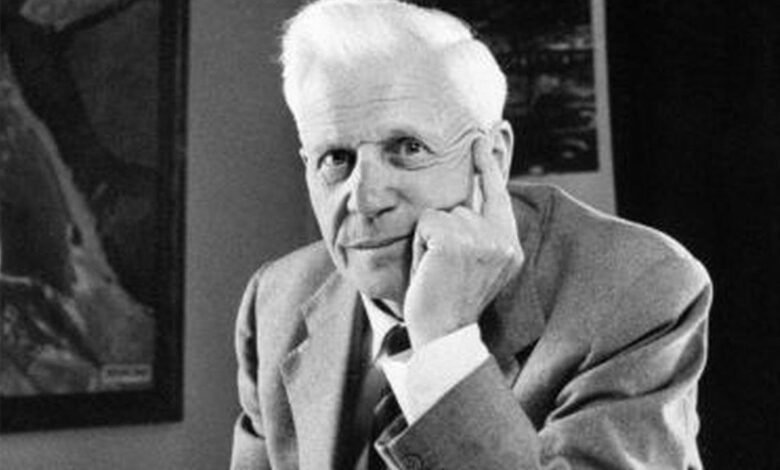
Historical photographs generally show Wallis as a serious, distinctive-looking figure, often wearing formal suits or engineering attire appropriate to his period. He developed the appearance of a traditional British technical professional, although his ideas were often anything but conventional.
His long working life allowed him to witness enormous changes in technology. He lived through the transition from early airships and biplanes to jet aircraft and increasingly sophisticated aviation systems.
Career and Major Achievements
Wallis spent most of his professional career associated with Vickers, where he worked on some of Britain’s most ambitious engineering projects.
One of his early achievements was his involvement in the R100 airship, a privately developed British rigid airship that successfully completed a major flight to Canada in 1930.
He later developed the geodetic construction method, an innovative lattice framework used in aircraft design. This technique became particularly famous through the Vickers Wellington bomber, whose strong structure allowed it to withstand significant battle damage.
During the Second World War, Wallis created the Upkeep bouncing bomb, which became central to Operation Chastise in 1943.
He subsequently developed enormous deep-penetration weapons, including Tallboy and Grand Slam, while also exploring advanced aircraft concepts after the war.
The Invention of the Bouncing Bomb
The invention that made Wallis internationally famous was the bouncing bomb, officially called Upkeep.
Wallis believed that conventional bombing was not necessarily the best method for destroying heavily protected dams. He developed the idea of a bomb that could bounce across the surface of a reservoir before striking the dam wall.
The concept was inspired by the familiar action of skipping a stone across water. However, turning that simple observation into a practical military weapon required extremely precise engineering.
The bomb was designed to rotate rapidly backwards when released from a specially modified aircraft. Its rotation and shape allowed it to bounce across the water rather than immediately sink.
The weapon could therefore pass over underwater defensive obstacles before reaching the dam. Once it struck the target wall, it was designed to sink alongside the structure and detonate.
Operation Chastise and the Dambusters
The bouncing bomb was used during Operation Chastise, the famous RAF raid carried out in May 1943.
The mission involved the specially formed 617 Squadron, whose crews attacked several major dams in Germany’s Ruhr region. The operation became widely known as the Dambusters raid.
The mission required extraordinary accuracy. The aircraft had to fly at extremely low altitude and maintain the correct speed and position for the bomb to work properly.
The raid became one of the most famous operations in RAF history. Wallis’s invention was an essential part of the mission, although its development involved extensive testing, engineering calculations and repeated experimentation.
The story later became the subject of the 1955 British film The Dam Busters, helping turn Wallis into a well-known public figure.
The Vickers Wellington and Geodetic Design
Another major achievement associated with Wallis was his innovative geodetic aircraft construction.
Instead of relying on a conventional framework, the system used a lightweight lattice of intersecting structural members. The design distributed stresses across the aircraft and created an exceptionally strong framework without making the aircraft unnecessarily heavy.
The technique was used in the Vickers Wellington bomber.
The Wellington became famous for its ability to survive damage. Its geodetic framework could remain structurally strong even when portions of the aircraft’s outer fabric were badly damaged.
This achievement demonstrated that Wallis was not simply a weapons inventor. He was a structural engineer whose ideas could influence the fundamental design of aircraft.
Tallboy and Grand Slam
Wallis continued developing innovative weapons after the success of the bouncing bomb.
His work led to the creation of the Tallboy, a massive deep-penetration bomb weighing approximately six tonnes. He later developed the even larger Grand Slam, which weighed around ten tonnes.
These weapons were designed to penetrate the ground or heavily built structures before detonating. Their enormous explosive force and penetration capability allowed them to attack targets that were difficult to destroy with conventional bombs.
Tallboy and Grand Slam were used against important military and industrial targets during the later stages of the Second World War.
Their development reflected Wallis’s broader engineering philosophy: instead of simply increasing explosive power, he sought to understand how a weapon could use speed, penetration and structural effects to achieve a particular result.
Post-War Aviation Research
Wallis remained involved in aviation research after the Second World War.
One area that attracted his attention was variable-geometry aircraft, often described as swing-wing technology. The basic idea was that an aircraft could alter the position or geometry of its wings to improve performance under different flight conditions.
This concept offered potential advantages for aircraft operating at both lower and higher speeds.
Although Wallis did not personally bring every concept into operational service, his research contributed to the broader development of advanced aeronautical engineering.
His willingness to investigate ideas that were still experimental reflected the same curiosity that had characterised his earlier career.
Relationship With Molly Wallis
Barnes Wallis married Molly Wallis, who remained an important part of his personal life.
Unlike his professional achievements, his family life was generally kept away from the intense public attention surrounding his wartime work. Wallis became famous because of his engineering rather than because he sought celebrity status.
His relationship with Molly provided a personal foundation during a career that involved demanding research, wartime pressures and highly ambitious engineering projects.
Marriage and Family Life
Wallis and Molly built their family life while his professional responsibilities continued to expand.
The Wallis family experienced the unusual circumstances that came with his growing reputation. During the Second World War, his work became directly connected to Britain’s military effort, while later decades brought public recognition for his scientific and engineering achievements.
Despite his fame, Wallis was primarily known as an engineer rather than a conventional celebrity.
His family life therefore remained considerably more private than his professional accomplishments.
Social Media Presence
Barnes Neville Wallis did not have a social media presence because he died in 1979, decades before platforms such as Facebook, Instagram, X and modern online networks existed.
Today, however, his name continues to appear in digital discussions about British engineering, aviation history and the Dambusters. Museums, historical organisations, documentaries and educational publications continue to discuss his work.
This modern interest shows that his engineering achievements remain relevant to audiences long after his death.
Personality and Interests
Wallis was widely associated with curiosity, determination and unconventional thinking.
He was not afraid to explore ideas that initially appeared unusual. The bouncing bomb is perhaps the clearest example: turning the simple concept of a stone skipping over water into a sophisticated military weapon required imagination as well as technical knowledge.
His interests extended beyond a single branch of engineering. He worked on airships, aircraft structures, weapons and future aviation concepts.
Wallis also had a strong interest in mathematics and scientific experimentation. His approach was often based on understanding a problem from fundamental principles and then testing possible solutions in practice.
That combination of theory and experimentation became one of the defining characteristics of his career.
Net Worth and Income
There is no reliably documented modern figure for Barnes Neville Wallis’s personal net worth. Because he lived and worked during a very different economic period, estimates found online should be treated cautiously unless supported by strong historical evidence.
Wallis earned his living primarily through his long professional career as an engineer and designer. His association with Vickers and later aviation organisations provided his principal professional income.
His historical importance, however, is measured less by personal wealth than by the value and influence of his engineering contributions.
Public Image and Legacy
Barnes Wallis became one of the most recognisable British engineers of the Second World War.
The Dambusters raid transformed the public perception of his work, and the later film The Dam Busters introduced his story to an even wider audience.
Yet his legacy is broader than the famous raid. His geodetic construction method influenced aircraft design, while his airship work demonstrated his expertise before the war. His Tallboy and Grand Slam bombs represented another important stage in his engineering career.
Wallis was elected a Fellow of the Royal Society in 1954 and was knighted in 1968 for his contributions.
His legacy continues through museums, historical research and discussions of British aviation and engineering. Engineers and historians still study his work because it demonstrates the power of approaching difficult problems from unconventional angles.
Why Is Barnes Neville Wallis Still Important?
Wallis remains important because many of his achievements illustrate fundamental principles of engineering.
His geodetic aircraft structure showed how geometry could create strength and efficiency. His bouncing bomb demonstrated how physics could be applied creatively to a specific military problem.
His later deep-penetration bombs showed how engineers could use momentum, penetration and controlled detonation rather than relying solely on explosive size.
Perhaps most importantly, his career demonstrates the importance of experimentation. Wallis repeatedly tested ideas, identified weaknesses and refined his designs.
That mindset remains valuable in engineering today.
Conclusion
Barnes Neville Wallis was far more than the inventor of the famous bouncing bomb. He was a pioneering engineer whose career covered airships, aircraft structures, wartime weapons and advanced aviation research.
From the R100 airship and the geodetic construction of the Vickers Wellington to Upkeep, Tallboy and Grand Slam, his work repeatedly challenged conventional engineering thinking.
His story is particularly remarkable because he achieved so much without following a traditional university education. Through practical experience, scientific curiosity and determined experimentation, he became one of Britain’s most celebrated engineers.
Today, his name remains closely connected with the Dambusters, but his broader contribution to aviation and engineering deserves equal recognition. His life stands as a lasting example of how imagination, technical knowledge and persistence can turn extraordinary ideas into reality.
8 FAQs About Barnes Neville Wallis
1. Who was Barnes Neville Wallis?
Barnes Neville Wallis was a British engineer, scientist and inventor best known for developing the bouncing bomb used during the 1943 Dambusters raid. He also made major contributions to aircraft structures, airships and deep-penetration bombs.
2. What was Barnes Neville Wallis famous for?
He was most famous for inventing the Upkeep bouncing bomb used during Operation Chastise. He was also known for his geodetic aircraft construction and the development of Tallboy and Grand Slam bombs.
3. When was Barnes Neville Wallis born?
He was born on 26 September 1887 in Derbyshire, England.
4. How old was Barnes Neville Wallis when he died?
Wallis died on 30 October 1979, aged 92.
5. What was the bouncing bomb?
The bouncing bomb was a specially designed weapon intended to skip across the surface of water before reaching a dam. It was created to overcome defensive obstacles and detonate close to the dam wall.
6. Was Barnes Neville Wallis involved with the Dambusters?
Yes. His Upkeep bouncing bomb was used by RAF 617 Squadron during the 1943 Dambusters raid, officially known as Operation Chastise.
7. Did Barnes Neville Wallis invent anything besides the bouncing bomb?
Yes. His achievements included the geodetic construction method used in the Vickers Wellington, work on the R100 airship, and the development of the Tallboy and Grand Slam deep-penetration bombs.
8. What is Barnes Neville Wallis’s legacy?
His legacy lies in his innovative approach to engineering. He demonstrated how scientific principles, practical experimentation and unconventional thinking could solve complex problems in aviation and engineering. His work continues to be remembered in British engineering and aviation history.
Introduction
Barnes Neville Wallis was one of Britain’s most influential engineers of the 20th century, remembered especially for creating the famous “bouncing bomb” used during the 1943 Dambusters raid. But his contribution to engineering went far beyond one wartime invention. During a career spanning more than six decades, he worked on airships, aircraft structures, powerful deep-penetration bombs and advanced aviation concepts.
Born in 1887, Wallis entered engineering without a university education and built his reputation through practical experience, scientific curiosity and relentless experimentation. His ideas helped transform aircraft design and military engineering during some of the most important periods of modern history.
This biography explores his early life, career, major achievements, family life, personality, public image, legacy and the fascinating story behind his most famous inventions.
Quick Facts About Barnes Neville Wallis
| Fact | Details |
|---|---|
| Full Name | Sir Barnes Neville Wallis |
| Born | 26 September 1887 |
| Birthplace | Derbyshire, England |
| Died | 30 October 1979 |
| Age at Death | 92 |
| Nationality | British |
| Profession | Engineer, scientist and inventor |
| Famous For | The bouncing bomb and advanced aircraft engineering |
| Major Aircraft Work | R100 and Vickers Wellington |
| Famous Weapons | Upkeep, Tallboy and Grand Slam |
| Major Honour | Fellowship of the Royal Society |
| Knighthood | 1968 |
| Best Known Event | 1943 Dambusters raid |
| Spouse | Molly Wallis |
| Field | Aeronautical and structural engineering |
Who Was Barnes Neville Wallis?
Barnes Neville Wallis was an English engineer, scientist and inventor whose work influenced aviation and military technology. He became particularly famous during the Second World War after developing the bouncing bomb, a highly unconventional weapon designed to attack heavily defended dams.
However, reducing his career to the bouncing bomb would overlook many of his other achievements. He worked on rigid airships, developed an innovative aircraft construction technique and later researched variable-geometry aircraft.
Wallis was also an example of an engineer who did not follow the traditional academic route. He left school at 16 without formal qualifications but gained extensive practical knowledge through apprenticeships and engineering work.
His career demonstrated how practical experience, mathematics, scientific thinking and creative problem-solving could combine to produce groundbreaking results.
Early Life and Background
Barnes Neville Wallis was born on 26 September 1887 in Derbyshire, England. His early years did not suggest that he would eventually become one of Britain’s most celebrated engineers.
Wallis left school at the age of 16. Instead of attending university, he entered the engineering world and developed his knowledge through practical training and apprenticeships.
This experience became an important part of his professional identity. Rather than learning engineering solely from textbooks, he developed an understanding of materials, structures and mechanical systems by working directly with them.
His early career included experience connected with shipbuilding and marine engineering before he moved increasingly toward aviation. His technical ability eventually brought him into the world of airships and aircraft design.
The rapid development of aviation during the early 20th century provided Wallis with an exciting environment in which to apply his ideas.
His Age and Physical Features
Barnes Neville Wallis lived for 92 years, from 1887 until 1979. He remained professionally active for much of his long life and continued to take an interest in engineering and scientific development well beyond the Second World War.
Historical photographs generally show Wallis as a serious, distinctive-looking figure, often wearing formal suits or engineering attire appropriate to his period. He developed the appearance of a traditional British technical professional, although his ideas were often anything but conventional.
His long working life allowed him to witness enormous changes in technology. He lived through the transition from early airships and biplanes to jet aircraft and increasingly sophisticated aviation systems.
Career and Major Achievements
Wallis spent most of his professional career associated with Vickers, where he worked on some of Britain’s most ambitious engineering projects.
One of his early achievements was his involvement in the R100 airship, a privately developed British rigid airship that successfully completed a major flight to Canada in 1930.
He later developed the geodetic construction method, an innovative lattice framework used in aircraft design. This technique became particularly famous through the Vickers Wellington bomber, whose strong structure allowed it to withstand significant battle damage.
During the Second World War, Wallis created the Upkeep bouncing bomb, which became central to Operation Chastise in 1943.
He subsequently developed enormous deep-penetration weapons, including Tallboy and Grand Slam, while also exploring advanced aircraft concepts after the war.
The Invention of the Bouncing Bomb
The invention that made Wallis internationally famous was the bouncing bomb, officially called Upkeep.
Wallis believed that conventional bombing was not necessarily the best method for destroying heavily protected dams. He developed the idea of a bomb that could bounce across the surface of a reservoir before striking the dam wall.
The concept was inspired by the familiar action of skipping a stone across water. However, turning that simple observation into a practical military weapon required extremely precise engineering.
The bomb was designed to rotate rapidly backwards when released from a specially modified aircraft. Its rotation and shape allowed it to bounce across the water rather than immediately sink.
The weapon could therefore pass over underwater defensive obstacles before reaching the dam. Once it struck the target wall, it was designed to sink alongside the structure and detonate.
Operation Chastise and the Dambusters
The bouncing bomb was used during Operation Chastise, the famous RAF raid carried out in May 1943.
The mission involved the specially formed 617 Squadron, whose crews attacked several major dams in Germany’s Ruhr region. The operation became widely known as the Dambusters raid.
The mission required extraordinary accuracy. The aircraft had to fly at extremely low altitude and maintain the correct speed and position for the bomb to work properly.
The raid became one of the most famous operations in RAF history. Wallis’s invention was an essential part of the mission, although its development involved extensive testing, engineering calculations and repeated experimentation.
The story later became the subject of the 1955 British film The Dam Busters, helping turn Wallis into a well-known public figure.
The Vickers Wellington and Geodetic Design
Another major achievement associated with Wallis was his innovative geodetic aircraft construction.
Instead of relying on a conventional framework, the system used a lightweight lattice of intersecting structural members. The design distributed stresses across the aircraft and created an exceptionally strong framework without making the aircraft unnecessarily heavy.
The technique was used in the Vickers Wellington bomber.
The Wellington became famous for its ability to survive damage. Its geodetic framework could remain structurally strong even when portions of the aircraft’s outer fabric were badly damaged.
This achievement demonstrated that Wallis was not simply a weapons inventor. He was a structural engineer whose ideas could influence the fundamental design of aircraft.
Tallboy and Grand Slam
Wallis continued developing innovative weapons after the success of the bouncing bomb.
His work led to the creation of the Tallboy, a massive deep-penetration bomb weighing approximately six tonnes. He later developed the even larger Grand Slam, which weighed around ten tonnes.
These weapons were designed to penetrate the ground or heavily built structures before detonating. Their enormous explosive force and penetration capability allowed them to attack targets that were difficult to destroy with conventional bombs.
Tallboy and Grand Slam were used against important military and industrial targets during the later stages of the Second World War.
Their development reflected Wallis’s broader engineering philosophy: instead of simply increasing explosive power, he sought to understand how a weapon could use speed, penetration and structural effects to achieve a particular result.
Post-War Aviation Research
Wallis remained involved in aviation research after the Second World War.
One area that attracted his attention was variable-geometry aircraft, often described as swing-wing technology. The basic idea was that an aircraft could alter the position or geometry of its wings to improve performance under different flight conditions.
This concept offered potential advantages for aircraft operating at both lower and higher speeds.
Although Wallis did not personally bring every concept into operational service, his research contributed to the broader development of advanced aeronautical engineering.
His willingness to investigate ideas that were still experimental reflected the same curiosity that had characterised his earlier career.
Relationship With Molly Wallis
Barnes Wallis married Molly Wallis, who remained an important part of his personal life.
Unlike his professional achievements, his family life was generally kept away from the intense public attention surrounding his wartime work. Wallis became famous because of his engineering rather than because he sought celebrity status.
His relationship with Molly provided a personal foundation during a career that involved demanding research, wartime pressures and highly ambitious engineering projects.
Marriage and Family Life
Wallis and Molly built their family life while his professional responsibilities continued to expand.
The Wallis family experienced the unusual circumstances that came with his growing reputation. During the Second World War, his work became directly connected to Britain’s military effort, while later decades brought public recognition for his scientific and engineering achievements.
Despite his fame, Wallis was primarily known as an engineer rather than a conventional celebrity.
His family life therefore remained considerably more private than his professional accomplishments.
Social Media Presence
Barnes Neville Wallis did not have a social media presence because he died in 1979, decades before platforms such as Facebook, Instagram, X and modern online networks existed.
Today, however, his name continues to appear in digital discussions about British engineering, aviation history and the Dambusters. Museums, historical organisations, documentaries and educational publications continue to discuss his work.
This modern interest shows that his engineering achievements remain relevant to audiences long after his death.
Personality and Interests
Wallis was widely associated with curiosity, determination and unconventional thinking.
He was not afraid to explore ideas that initially appeared unusual. The bouncing bomb is perhaps the clearest example: turning the simple concept of a stone skipping over water into a sophisticated military weapon required imagination as well as technical knowledge.
His interests extended beyond a single branch of engineering. He worked on airships, aircraft structures, weapons and future aviation concepts.
Wallis also had a strong interest in mathematics and scientific experimentation. His approach was often based on understanding a problem from fundamental principles and then testing possible solutions in practice.
That combination of theory and experimentation became one of the defining characteristics of his career.
Net Worth and Income
There is no reliably documented modern figure for Barnes Neville Wallis’s personal net worth. Because he lived and worked during a very different economic period, estimates found online should be treated cautiously unless supported by strong historical evidence.
Wallis earned his living primarily through his long professional career as an engineer and designer. His association with Vickers and later aviation organisations provided his principal professional income.
His historical importance, however, is measured less by personal wealth than by the value and influence of his engineering contributions.
Public Image and Legacy
Barnes Wallis became one of the most recognisable British engineers of the Second World War.
The Dambusters raid transformed the public perception of his work, and the later film The Dam Busters introduced his story to an even wider audience.
Yet his legacy is broader than the famous raid. His geodetic construction method influenced aircraft design, while his airship work demonstrated his expertise before the war. His Tallboy and Grand Slam bombs represented another important stage in his engineering career.
Wallis was elected a Fellow of the Royal Society in 1954 and was knighted in 1968 for his contributions.
His legacy continues through museums, historical research and discussions of British aviation and engineering. Engineers and historians still study his work because it demonstrates the power of approaching difficult problems from unconventional angles.
Why Is Barnes Neville Wallis Still Important?
Wallis remains important because many of his achievements illustrate fundamental principles of engineering.
His geodetic aircraft structure showed how geometry could create strength and efficiency. His bouncing bomb demonstrated how physics could be applied creatively to a specific military problem.
His later deep-penetration bombs showed how engineers could use momentum, penetration and controlled detonation rather than relying solely on explosive size.
Perhaps most importantly, his career demonstrates the importance of experimentation. Wallis repeatedly tested ideas, identified weaknesses and refined his designs.
That mindset remains valuable in engineering today.
Conclusion
Barnes Neville Wallis was far more than the inventor of the famous bouncing bomb. He was a pioneering engineer whose career covered airships, aircraft structures, wartime weapons and advanced aviation research.
From the R100 airship and the geodetic construction of the Vickers Wellington to Upkeep, Tallboy and Grand Slam, his work repeatedly challenged conventional engineering thinking.
His story is particularly remarkable because he achieved so much without following a traditional university education. Through practical experience, scientific curiosity and determined experimentation, he became one of Britain’s most celebrated engineers.
Today, his name remains closely connected with the Dambusters, but his broader contribution to aviation and engineering deserves equal recognition. His life stands as a lasting example of how imagination, technical knowledge and persistence can turn extraordinary ideas into reality.
8 FAQs About Barnes Neville Wallis
1. Who was Barnes Neville Wallis?
Barnes Neville Wallis was a British engineer, scientist and inventor best known for developing the bouncing bomb used during the 1943 Dambusters raid. He also made major contributions to aircraft structures, airships and deep-penetration bombs.
2. What was Barnes Neville Wallis famous for?
He was most famous for inventing the Upkeep bouncing bomb used during Operation Chastise. He was also known for his geodetic aircraft construction and the development of Tallboy and Grand Slam bombs.
3. When was Barnes Neville Wallis born?
He was born on 26 September 1887 in Derbyshire, England.
4. How old was Barnes Neville Wallis when he died?
Wallis died on 30 October 1979, aged 92.
5. What was the bouncing bomb?
The bouncing bomb was a specially designed weapon intended to skip across the surface of water before reaching a dam. It was created to overcome defensive obstacles and detonate close to the dam wall.
6. Was Barnes Neville Wallis involved with the Dambusters?
Yes. His Upkeep bouncing bomb was used by RAF 617 Squadron during the 1943 Dambusters raid, officially known as Operation Chastise.
7. Did Barnes Neville Wallis invent anything besides the bouncing bomb?
Yes. His achievements included the geodetic construction method used in the Vickers Wellington, work on the R100 airship, and the development of the Tallboy and Grand Slam deep-penetration bombs.
8. What is Barnes Neville Wallis’s legacy?
His legacy lies in his innovative approach to engineering. He demonstrated how scientific principles, practical experimentation and unconventional thinking could solve complex problems in aviation and engineering. His work continues to be remembered in British engineering and aviation history.