Ann Hogarth Biography: The Life Behind Muffin the Mule
Ann Hogarth: The Woman Behind Muffin the Mule
Introduction
Ann Hogarth was a pioneering British puppeteer whose creative work helped shape the early days of children’s television. Best known for operating the beloved puppet Muffin the Mule, she became part of British television history through her performances, storytelling, and dedication to puppetry. During the 1940s and 1950s, Muffin entertained audiences on BBC television, dancing across a piano while presenter Annette Mills played music and sang songs.
However, Ann Hogarth’s career extended far beyond one famous puppet. Alongside her husband, Jan Bussell, she developed the Hogarth Puppets, a theatrical company that toured internationally and presented a wide range of performances. Her life combined creativity, stagecraft, and innovation, making her an important figure in British entertainment. This article explores Ann Hogarth’s early life, career, family, achievements, and lasting legacy.
Quick Facts About Ann Hogarth
| Detail | Information |
|---|---|
| Full Name | Margaret Ann Gildart Jackson |
| Professional Name | Ann Hogarth |
| Date of Birth | July 19, 1910 |
| Birthplace | Frensham, Surrey, England |
| Date of Death | April 9, 1993 |
| Age at Death | 82 |
| Nationality | British |
| Profession | Puppeteer and Writer |
| Famous For | Muffin the Mule |
| Husband | Jan Bussell |
| Children | One daughter |
| Education | Royal Academy of Dramatic Art |
| Company | Hogarth Puppets |
| Known For | Early British television puppetry |
Who Was Ann Hogarth?
Ann Hogarth was a British puppeteer who played an important role in the development of theatrical and television puppetry. She gained recognition for operating Muffin the Mule, a puppet character that became one of the early stars of British children’s television.
Her professional work was closely connected to her husband, Jan Bussell. Together, they established the Hogarth Puppets and toured with productions that included marionettes, shadow puppets, theatrical performances, and musical entertainment.
What made Hogarth’s career distinctive was her involvement in several aspects of puppetry. She was not only a performer but also contributed to scripts and creative production. Her work helped demonstrate how puppets could become memorable characters in television and live theatre.
Although many people remember her primarily through Muffin the Mule, her wider contribution to British puppetry was substantial.
Early Life and Background
Ann Hogarth was born Margaret Ann Gildart Jackson on July 19, 1910, in Frensham, Surrey, England. She was the fourth of five children born to William Gildart Jackson and Olive Mary Jackson.
Her father worked as a schoolteacher, while her early family life included the loss of her mother when she was still young. These early experiences formed part of her background before she entered the performing arts.
Hogarth attended St Catherine’s School in Bramley, where she developed an interest in speaking and performance. She reportedly wanted to pursue a career on the stage, but she also prepared herself for more conventional employment.
Before fully entering the theatre world, she trained as a secretary. She later studied at the Royal Academy of Dramatic Art, commonly known as RADA, where she gained valuable experience connected to the performing arts.
Her training helped her secure work as a stage manager at the Players’ Theatre in London. It was there that she met Jan Bussell in 1932, beginning a professional relationship that would shape much of her future career.
Education and Entry Into Theatre
Ann Hogarth’s education at RADA gave her a foundation in theatre, but her interests were not limited to acting. She developed practical knowledge of stage management and theatrical organization.
Her work at the Players’ Theatre introduced her to the behind-the-scenes responsibilities involved in putting on a performance. These skills later became useful when she worked with puppets, scripts, and touring productions.
Jan Bussell shared an interest in model theatres and puppetry. Before the couple established their own company, Bussell had already explored the potential of puppets in televised performances.
Their meeting in 1932 brought together two people with related creative interests. Their partnership eventually led to the creation of the Hogarth Puppets, a company that became central to the British puppetry scene.
Ann Hogarth’s Career and Major Achievements
Ann Hogarth built her career through the Hogarth Puppets, international touring, and television work with Muffin the Mule. She helped write scripts, operated marionettes, and collaborated with Jan Bussell and Annette Mills on early children’s programming.
Her major achievements included contributing to the popularity of Muffin the Mule, developing theatrical puppet productions, and helping introduce British puppetry to international audiences. She also contributed to books and other creative projects connected to puppetry.
The Creation of Hogarth Puppets
Ann Hogarth and Jan Bussell developed their professional puppet company during the 1930s. Their work involved creating performances that combined puppetry with theatrical storytelling and musical entertainment.
The company was known as the Hogarth Puppets and developed a varied repertoire. Its productions included operetta, dance, poetry, Shakespeare, and variety performances.
Rather than focusing on a single type of puppet, the couple explored different forms of performance. They used marionettes, shadow puppets, and other theatrical techniques to entertain audiences.
Their productions also included a cast of puppets representing different characters. Some performances featured musical elements, including puppet orchestras and elaborate stage arrangements.
The company toured extensively, visiting different parts of Britain and countries overseas. These tours helped establish the Hogarth Puppets as an internationally recognized theatrical group.
Ann Hogarth and Muffin the Mule
Muffin the Mule remains the most recognizable part of Ann Hogarth’s career. The puppet became a television favorite during the early years of British children’s programming.
The original mule puppet was created by puppet maker Fred Tickner in 1933 for the Hogarth Puppets. At first, the puppet was part of a circus-style performance and was not yet known by the name Muffin.
In 1946, television presenter Annette Mills selected the mule for her children’s programme. She named the character Muffin the Mule, and Ann Hogarth became responsible for operating the puppet.
Muffin first appeared on the BBC programme For the Children on October 20, 1946. The show was broadcast from Alexandra Palace, where early television programmes were produced.
The performance featured Muffin dancing on top of Annette Mills’ piano. Mills played music and sang songs while Hogarth manipulated the puppet’s movements.
This combination of music, storytelling, and puppetry created an entertaining format for young viewers. Muffin quickly became associated with early British television.
Her Role in Muffin the Mule’s Success
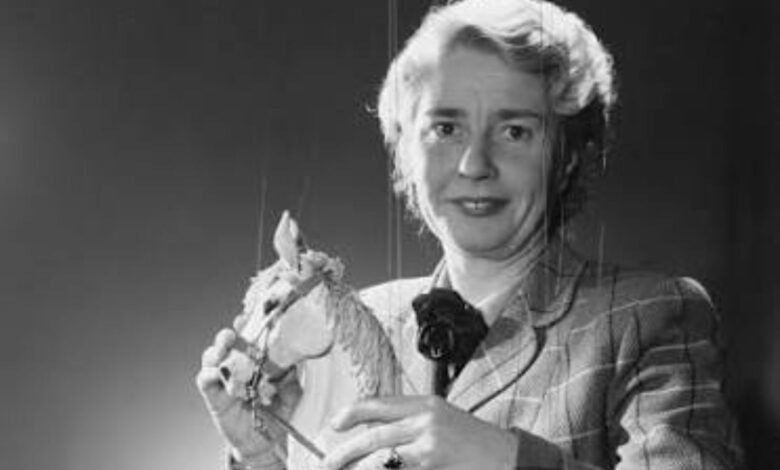
Ann Hogarth’s work behind Muffin the Mule required considerable skill and timing. As a marionette operator, she controlled the puppet’s movements using strings, helping create the appearance of a lively character.
The puppet’s movements had to match the music, stories, and actions taking place during the broadcast. Because many early television programmes were performed live, performers had limited opportunities to correct mistakes.
Hogarth also contributed to the writing of scripts for Muffin’s performances. Annette Mills provided songs and music, while Jan Bussell directed the shows.
The collaboration between the three creatives helped establish Muffin as a recognizable television character. Each person contributed a different skill to the production.
Muffin’s popularity continued through the late 1940s and early 1950s. The character became associated with the development of children’s television in Britain.
Muffin the Mule’s Television Legacy
Muffin the Mule was among the earliest puppet characters to achieve widespread popularity on British television. The character’s success was significant during a period when television was still developing as a form of mass entertainment.
Muffin appeared in BBC programming until 1955. The character’s television presence continued in later productions, including appearances connected to ITV during the 1950s.
One important aspect of Muffin’s success was the development of merchandise. Books, toys, records, games, and other products were created around the character.
Muffin is also recognized as the first puppet to headline its own television show, according to Guinness World Records. This achievement reflects the character’s importance in early television history.
Ann Hogarth’s puppeteering was central to this success. Without the skill required to bring Muffin to life, the character would not have had the same presence on screen.
International Touring and Theatrical Work
Ann Hogarth’s career was not limited to television studios. She and Jan Bussell toured with the Hogarth Puppets in Britain and internationally.
Their performances introduced audiences to different styles of puppet theatre. The company presented shows in countries across Europe and in other parts of the world, including Australia and Canada.
The couple developed productions that appealed to both children and adults. Their repertoire included theatrical adaptations, music, poetry, and visual storytelling.
The Hogarth Puppets also created ambitious productions using larger puppets. One notable project involved life-size puppets for The Water Babies, a production associated with the Glyndebourne Theatre.
This work demonstrated how puppetry could be used in larger theatrical productions. It also helped expand the public understanding of puppetry as an artistic discipline.
Writing and Creative Contributions
Ann Hogarth contributed to puppetry through writing as well as performance. Her work included books and publications related to puppets and children’s entertainment.
She was associated with Muffin Stories, a collection connected to the famous television character. She also wrote Look at Puppets, which explored aspects of puppetry.
In 1985, she and Jan Bussell published Fanfare for Puppets. The book reflected their experience in the field and their understanding of puppet theatre.
Hogarth was also involved in the publication of Muffin annuals during the 1950s. These projects helped extend the character’s appeal beyond television.
Her writing provided another way for audiences to engage with the world of puppetry. It also contributed to the preservation of ideas and experiences from her career.
Ann Hogarth’s Relationship With Jan Bussell
Ann Hogarth’s relationship with Jan Bussell was both personal and professional. The couple met in 1932 and began working together on puppet theatre projects.
Bussell had a strong interest in model theatres and puppetry, while Hogarth brought her theatre training and performance experience to their partnership.
Together, they built the Hogarth Puppets into a touring company. Their collaboration continued for decades and included television, theatre, writing, and international performances.
Their professional relationship required cooperation in many areas, including production planning, puppet operation, creative development, and touring arrangements.
The couple’s shared commitment to puppetry helped establish a long-lasting creative partnership.
Marriage and Family Life
Ann Hogarth married Jan Bussell in 1933. Their marriage lasted until Bussell’s death in 1985.
The couple had one daughter, Sally McNally, who later continued aspects of the family puppetry tradition.
Their home life was closely connected to their work. The Hogarths welcomed other puppeteers and were involved in supporting the development of puppetry as a profession.
During periods when they were not touring, their home provided a place where puppeteers could meet and work. Their family connection to the art form continued through later generations.
Following Jan Bussell’s death, Ann Hogarth retired from performing with the puppet collection. She later lived in Budleigh Salterton, Devon.
Her Age and Physical Features
Ann Hogarth was born on July 19, 1910, and died on April 9, 1993. She was approximately 82 years old when she passed away.
Historical photographs show her working with Muffin the Mule and other puppets. These images provide a visual record of her career in television and theatre.
However, reliable public information about her height, weight, eye color, and other detailed physical measurements is limited. Such information was not a major focus of the historical records about her life.
Her public identity was primarily connected to her professional achievements as a puppeteer rather than celebrity-style personal details.
Social Media Presence
Ann Hogarth lived and worked decades before social media platforms became part of everyday communication.
As a result, she did not have personal accounts on modern platforms such as Instagram, Facebook, or X. Her career took place during the development of radio, television, and live theatre.
Today, interest in her work can be found through historical archives, puppet exhibitions, and websites dedicated to Muffin the Mule and British puppetry.
These resources help preserve information about her professional contributions for new generations of audiences.
Personality and Interests
There is limited detailed public information about Ann Hogarth’s private personality and everyday interests. Most historical accounts focus on her professional work and her partnership with Jan Bussell.
Her career suggests a strong interest in theatre, storytelling, puppetry, and creative performance. She worked across different forms of entertainment and helped develop productions for varied audiences.
Her willingness to explore marionettes, shadow puppets, and theatrical adaptations reflects the broad creative scope of her work.
Rather than being associated with a single television appearance, she developed a career that combined practical theatre skills with artistic experimentation.
Net Worth and Income
Ann Hogarth’s exact net worth has not been publicly documented in reliable historical sources. Therefore, any specific figure presented as her personal wealth would be speculative.
Her income likely came from professional activities such as theatrical performances, touring, television work, writing, and puppet-related projects. However, detailed financial records about her earnings are not widely available.
The Hogarth Puppets operated as a professional touring company, but the financial success of individual performances and projects varied.
It is important to distinguish between the commercial popularity of Muffin the Mule and confirmed information about Ann Hogarth’s personal wealth. Popularity, merchandise sales, and television success do not automatically establish an individual’s net worth.
Public Image and Legacy
Ann Hogarth is remembered primarily for her contribution to British puppetry and early children’s television.
Her work with Muffin the Mule helped establish puppet characters as important elements of television entertainment. The character’s popularity demonstrated how puppetry could attract audiences and support long-running entertainment formats.
Her broader legacy is connected to the Hogarth Puppets. Through international touring and theatrical productions, she and Jan Bussell helped showcase puppetry as an art form suitable for different audiences.
The company’s work also influenced later interest in puppet theatre. Its productions demonstrated the potential of combining puppetry with music, literature, and stage performance.
Muffin the Mule remains a recognizable name in British television history, and Ann Hogarth’s contribution continues to be discussed in historical accounts of the character.
Why Is Ann Hogarth Important to Television History?
Ann Hogarth’s importance comes from her role in the early development of British television puppetry.
Television production in the 1940s involved technical limitations and demanding live performances. Puppeteers had to coordinate movements carefully while working within the restrictions of early broadcasting equipment.
Muffin the Mule became a notable example of how a puppet could be adapted successfully for television. The character’s performances combined music, movement, and storytelling in a format that appealed to children.
Hogarth’s contribution was part of a broader shift in entertainment, as puppets moved from traditional theatre settings into television studios.
Her work helped demonstrate the creative possibilities of puppetry on screen.
Later Years and Death
After Jan Bussell died in 1985, Ann Hogarth retired from performing with the puppet collection.
She later moved to Budleigh Salterton in Devon, where she spent her final years.
Ann Hogarth died on April 9, 1993. Her death marked the end of a career that had included decades of theatrical and television work.
Although she was no longer performing, her contribution to British puppetry remained part of the history of Muffin the Mule and the Hogarth Puppets.
The puppet collection and historical records associated with her work have helped preserve the memory of her career.
Conclusion
Ann Hogarth was a talented British puppeteer whose career extended from theatrical performances to the early days of children’s television. Her work with Muffin the Mule made her a recognizable figure in British entertainment, while her partnership with Jan Bussell helped develop the Hogarth Puppets into an internationally touring company.
Her contributions included puppeteering, writing, theatrical production, and creative collaboration. Although detailed information about her private life and finances remains limited, her professional achievements are well established.
From the piano performances of Muffin the Mule to ambitious theatrical productions, Ann Hogarth helped demonstrate the lasting potential of puppetry. Her legacy remains connected to the history of British television and the development of puppet theatre.
8 Frequently Asked Questions About Ann Hogarth
1. Who was Ann Hogarth?
Ann Hogarth was a British puppeteer best known for operating Muffin the Mule, an early star of British children’s television. She also co-founded and worked with the Hogarth Puppets.
2. When was Ann Hogarth born?
Ann Hogarth was born on July 19, 1910, in Frensham, Surrey, England.
3. What was Ann Hogarth famous for?
She was famous for operating Muffin the Mule on early BBC children’s television. She also had a long career in theatrical puppetry.
4. Who was Ann Hogarth’s husband?
Her husband was Jan Bussell, a puppeteer and her professional partner. They married in 1933 and worked together for many years.
5. When did Muffin the Mule first appear on television?
Muffin the Mule first appeared on BBC television on October 20, 1946, in the programme For the Children.
6. Did Ann Hogarth have children?
Yes. Ann Hogarth and Jan Bussell had one daughter, Sally McNally.
7. When did Ann Hogarth die?
Ann Hogarth died on April 9, 1993, in Budleigh Salterton, Devon, England.
8. What is Ann Hogarth’s legacy?
Her legacy includes her work with Muffin the Mule, the development of the Hogarth Puppets, international theatrical touring, and contributions to British puppetry.