PXLESS: The Ultimate Pixel-Free Design Revolution for Modern Web and UI/UX
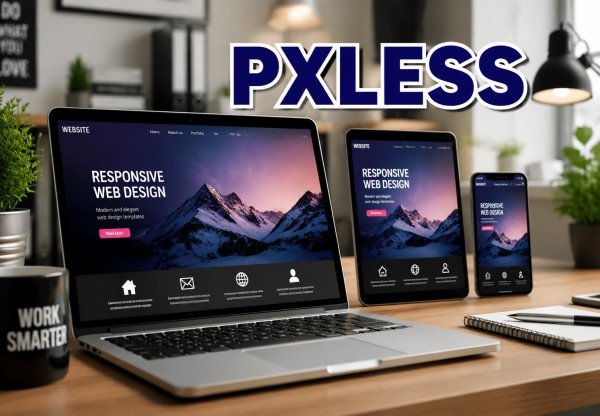
In the fast-evolving digital world, designing websites and apps that adapt seamlessly across multiple devices has become a necessity. Enter PXLESS, a cutting-edge design philosophy that moves away from rigid pixel-based layouts towards flexible, responsive, and scalable design systems. Unlike traditional pixel-perfect design, PXLESS prioritizes user experience, accessibility, and future-readiness, making it essential for modern web and app creators.
With the explosion of smartphones, tablets, foldable devices, ultra-wide monitors, and wearable tech, fixed-pixel designs often fail to provide a consistent user experience. PXLESS bridges this gap, enabling designers to create interfaces that scale fluidly across any device without compromising visual integrity or performance.
Quick Info About PXLESS
| Detail | Information |
|---|---|
| Keyword | PXLESS |
| Meaning | Pixel-less or less dependent on fixed pixels |
| Main Field | Web Design, UI/UX Design, Responsive Development |
| Core Idea | Flexible layouts and adaptive design systems |
| Useful For | Websites, apps, dashboards, e-commerce platforms |
| Main Benefits | Enhanced responsiveness, accessibility, scalability, SEO |
| Related Keywords | Pixel-Free Design, Responsive Design, Fluid Layouts, Flexbox, CSS Grid, Adaptive UI |
What is PXLESS?
PXLESS stands for Pixel-Less design, which refers to building digital interfaces without relying solely on fixed pixel measurements. Instead of defining every element in pixels, PXLESS encourages the use of:
- Relative units (
%, vw, vh, em, rem) - Flexible grids (
CSS Grid,Flexbox) - Component-based architecture
- Fluid typography and layouts
This approach ensures that digital products remain adaptive, readable, and aesthetically consistent across devices of all sizes.
Why PXLESS is Redefining Design Standards
Pixel-Perfect Design vs PXLESS
Traditional pixel-perfect design emphasizes exact alignment, precise spacing, and fixed measurements. While visually clean, it fails on diverse devices, often breaking layouts or creating accessibility issues. PXLESS, on the other hand:
- Prioritizes adaptability over rigid precision
- Enhances mobile responsiveness
- Supports accessibility for users who resize text or zoom
- Future-proofs designs for emerging devices and resolutions
Benefits of Going Pixel-Free
- Fluidity: Content adjusts naturally to various screen dimensions.
- Scalability: Elements like images, cards, and buttons scale proportionally.
- Accessibility: Users can zoom or resize without breaking layouts.
- SEO Advantage: Google favors responsive websites that offer a consistent user experience.
- Maintenance Efficiency: Less need for redesigns as new devices appear.
Core Principles of PXLESS Design
1. Fluid Layouts
PXLESS employs layouts that expand or contract based on the viewport. This eliminates rigid breakpoints and ensures smoother transitions across devices.
2. Relative Units
Using em, rem, %, and viewport units allows typography, spacing, and elements to scale dynamically, providing a consistent visual hierarchy.
3. Responsive Components
From buttons and forms to cards and navigation bars, PXLESS promotes scalable UI components that adapt gracefully to different screen sizes.
4. Mobile-First Approach
PXLESS encourages designing for the smallest screen first and progressively enhancing layouts for larger displays.
5. Accessibility-First Mindset
Designs must remain functional for users who adjust font sizes, use assistive devices, or rely on zooming to interact with content.
Related Keywords to Incorporate in PXLESS Strategy
- Pixel-Free Design: Design methodology avoiding fixed pixels
- Fluid Layouts: Flexible and proportion-based layouts
- Responsive Design: Adapting UI across devices
- Adaptive UI: Component-based interfaces that adjust to context
- CSS Grid & Flexbox: Core technologies enabling PXLESS
- Mobile-First Design: Prioritizing smaller screen design first
Technical Implementation of PXLESS
- CSS Grid & Flexbox: Enables flexible placement and alignment of elements.
- Relative Sizing: Replace
pxwithem,rem,%,vw, andvh. - Container Queries: Adapt component styles based on parent container size.
- Fluid Typography: Use scalable font sizes that grow or shrink with screen size.
- Testing Across Devices: Ensure layouts perform well on smartphones, tablets, desktops, foldables, and large displays.
SEO Advantages of PXLESS
PXLESS designs indirectly improve SEO by:
- Enhancing mobile usability, a key ranking factor for Google.
- Reducing page layout shifts, improving Core Web Vitals scores.
- Supporting inclusive design, meeting accessibility standards (WCAG).
- Offering faster load times when combined with optimized images and resources.
While PXLESS alone won’t guarantee top rankings, it complements SEO efforts by improving user experience and engagement metrics.
Challenges to PXLESS Implementation
- Mindset Shift: Designers accustomed to pixel perfection must adapt to fluid thinking.
- Tool Limitations: Some legacy software defaults to fixed artboards.
- Complex Testing: Ensuring consistent performance across all devices increases QA requirements.
- Performance Considerations: Improper fluid layouts may impact speed or visual stability.
Real-World Applications of PXLESS
- Websites & Blogs: Adaptive article layouts for desktops, tablets, and mobile devices.
- E-commerce Platforms: Product cards, filters, and checkout flows that scale smoothly.
- Business Dashboards: Responsive charts, tables, and sidebars.
- Mobile Apps: Scalable interface components across devices.
- Digital Branding: Logos, icons, and banners that maintain visual quality across formats.
Best Practices for PXLESS
- Design mobile-first, then scale up.
- Use relative units strategically for typography and spacing.
- Apply min and max width constraints to prevent extremes.
- Optimize images and media for responsive display.
- Continuously test accessibility and Core Web Vitals.
- Leverage component-based design for reusable, scalable UI elements.
Future of PXLESS in 2026 and Beyond
With foldable devices, wearable technology, and AR/VR displays emerging, PXLESS positions designers to stay ahead. Container queries, component-based systems, and fluid layouts are expected to become standard practice, making pixel-free thinking a crucial skill for modern UI/UX designers.
Conclusion
PXLESS is not just a trend—it’s a design evolution. By moving away from rigid pixels and embracing flexible, responsive, and accessible design principles, creators can build digital experiences that are future-proof, scalable, and optimized for users. For businesses, app developers, and designers, adopting PXLESS ensures enhanced user experience, better SEO performance, and more efficient design workflows.